The way customers shop has changed forever. People do not follow a straight line from discovery to purchase anymore. Someone might see a product on Instagram, ask questions on WhatsApp, check reviews on Amazon or Flipkart, and finally buy it from a website or even a physical store. Along every step, they compare, switch, and expect brands to remember their preferences.
If a business is not able to stay connected with customers across all these touchpoints, it loses the sale. This is precisely the reason why an omnichannel marketing platform has become a critical investment for modern brands in India.
Introduction
Marketing for businesses of all scales has become increasingly complicated. Be it a new D2C brand, a fast-growing e-commerce start-up, or an established retail brand, one is always fighting for eyeballs in a cluttered digital space. And running separate campaigns on Instagram, emails, SMS, Google ads, marketplaces, and retail stores without having one single unified strategy creates confusion and inconsistency.
Today's customers want convenience and personalization. They want brands to remember them, understand them, and communicate with them in the right place at the right time.
To satisfy these expectations, businesses require an omnichannel marketing platform that not only connects customer interactions but also delivers a consistent brand experience on every channel.
What Exactly is an Omnichannel Marketing Platform
An omnichannel marketing platform represents an integrated system, incorporating all marketing channels and customer touchpoints. It allows the capturing of customer behavior in real time, thus enabling a brand to engage them through coordinated communication instead of scattered efforts.
Businesses can smoothen channels such as:
Website and mobile app
Social media and advertising like Meta, Google Ads, Youtube ads, etc.
Email and SMS campaigns
WhatsApp and chat automation
Marketplaces like Amazon, Flipkart, Myntra, Nykaa and Meesho
Offline retail stores and customer support interactions
The idea is simple: no matter where the customer starts or ends on their journey, the brand experience should be seamless, connected, and personalized.
Omnichannel vs. Multichannel
Many companies think they are doing omnichannel because they are active on multiple platforms, but the reality is that most of them have a multichannel approach.
Here is what multichannel looks like:
Every platform is different, operating on its own.
Marketing teams and analytics are disconnected.
The brand message is different from one channel to another.
Customer data remains scattered and hard to use
Personalization is either limited or manual.
Here is what omnichannel looks like:
All channels are connected to one platform.
Messaging remains consistent everywhere
Customer data is automatically synced across touchpoints.
Personalization is automated and relevant.
The customer journey becomes frictionless.
An omnichannel setup signifies that the brand speaks to its customers with one voice and one strategy, no matter what the touchpoint of interaction is.
Know All the Channels Targeted by Omnichannel Platforms
Omnichannel marketing brings together core communication channels that customers use daily.
Email is a powerful tool for sending personalised offers, order updates, and newsletters directly to the inbox. Meta channels, including Facebook and Instagram, help brands reach buyers through targeted ads, social posts, reviews, and product discovery. Messaging platforms such as WhatsApp, SMS, and in-app chat allow real-time conversations, quick responses, and automated reminders that keep customers in the loop about ongoing brand deals, offers, etc. Alongside these, additional channels like Google Ads, marketplaces, mobile apps, and offline retail create a complete ecosystem, where every interaction is connected and is personalized to every buyer. When these channels work in sync, customers enjoy a seamless experience from discovery to conversion.
Why Indian Businesses Need an Omnichannel Marketing Platform
The Indian consumer has transformed. They compare prices, expect immediate responses, deploy multiple modes of making payments, follow influencers, and seek festival offers. They even hop between platforms based on convenience.
Brands that fail to keep up are soon forgotten.
This is supported through the following five major advantages of using an omnichannel e-commerce platform combined with omnichannel marketing tools.
1. It creates personalized customer journeys.
Customers no longer want generic promotions; what they desire are experiences tailored to their interests and purchase history.
Using an omnichannel marketing platform allows brands to:
Track a customer's behavior across channels
Understand the products they browse and how they purchase them
Send relevant and timely offers
Personalized journeys directly increase customer satisfaction, conversions, and retention
2. It creates consistent brand experiences across mediums.
Just think of a customer who sees something on Instagram, enquires about it on WhatsApp, and then walks into the retail store expecting the same information with the same price. Due to separate systems, customers usually get confused and leave.
In an omnichannel approach, customers experience:
The same pricing and promotions
The same communicative tone
The same confidence in the brand.
Consistency builds trust, and trust drives sales.
3. It amplifies conversions and revenue without additional advertising spend.
Most brands spend heavily on advertising to drive people to the website, but a lot of those visitors drop off before completing the purchase.
An omnichannel marketing platform reduces drop-offs through:
Cart recovery automation
WhatsApp reminders
Personalised product recommendations
Exclusive loyalty and cashback triggers
These touchpoints improve revenue without increasing marketing budgets.
4. It Reduces the Cost and Complexity of Marketing
Instead of using several different, disconnected tools for email, SMS, WhatsApp, analytics, customer support, and automation, it's all handled in one integrated platform.
The results are immediate:
Fewer tools to manage
Fewer manual tasks
Lower subscription and operational costs
Higher efficiency and performance
This makes omnichannel marketing scalable and cost-effective for both startups and large enterprises.
5. It improves decision-making with real-time insights.
Alliances make data powerful. It is then that businesses can immaculately outline:
Which channels drive the most conversions
Which customer segments bring the highest lifetime value?
Which campaigns deserve more budget
Which products are trending across platforms
Leaders can make confident, data-backed decisions instead of relying on assumptions.
When Should a Business Shift to an Omnichannel Model
If any of the following challenges sound familiar, your business is ready for omnichannel marketing:
You use multiple unconnected marketing tools.
You struggle to retarget drop-offs.
You are unsure which marketing channels are converting.
Teams cannot access the complete customer history.
Your repeat purchase rate is low.
Customer support struggles to answer queries accurately
Your brand experience feels different across the platforms.
A shift toward an omnichannel system solves these problems smoothly and sustainably.
The Future of Customer Experience in India
Indian customers reward brands that are fast, personal, and consistent. They want convenience without effort, and they want brands to understand their needs without asking repeatedly.
This trend is only going to get stronger. Seamless customer journeys will be the biggest competitive advantage as ecommerce matures and digital adoption expands across cities and towns.
Businesses that adopt the omnichannel marketing platform early on will have:
Higher customer loyalty
Higher lifetime value
Lower customer acquisition cost
More predictable and scalable growth
In the future, the strongest brands will not be the ones possessing the largest marketing budgets. They will be the ones who connect with customers the smartest.
Conclusion:
Winning customers today is not about being everywhere; rather, it's about being connected everywhere. An omnichannel marketing platform helps the business in delivering a unified experience across all touchpoints. It simplifies marketing, personalizes communication, and creates long-lasting customer relationships that support sustainable revenue. Whether you're a startup, an emerging business, or an established enterprise, omnichannel is no longer a trend; it's the new standard for growth.
FAQs
1. How can my brand benefit from an omnichannel marketing platform?
It helps you deliver a consistent and personalized experience across all customer touchpoints. This increases conversions, repeat purchases, customer satisfaction, and marketing ROI while reducing the need for multiple tools.
2. How are customers affected by omnichannel marketing platforms?
Customers enjoy a smoother journey. They get relevant offers, quick responses, and consistent information whether they shop through social media, websites, WhatsApp, email, or in-store. This makes buying easier and builds trust.
3. What exactly does an omnichannel marketing platform do?
It connects all marketing channels and customer data into one system. It automates personalized communication, simplifies campaign management, and provides real-time insights to boost revenue.
4. I am using a multichannel marketing platform. Should I switch to an omnichannel marketing platform?
Yes, if you want better customer retention and higher sales. Multichannel focuses on presence, while omnichannel focuses on connection. If your channels do not talk to each other, you are losing opportunities.
5. I am looking for the right omnichannel marketing platform. What should I look out for?
Choose a platform that offers real-time data syncing, automated journeys, deep personalization, seamless ecommerce and marketplace integrations, strong analytics, and scalability.
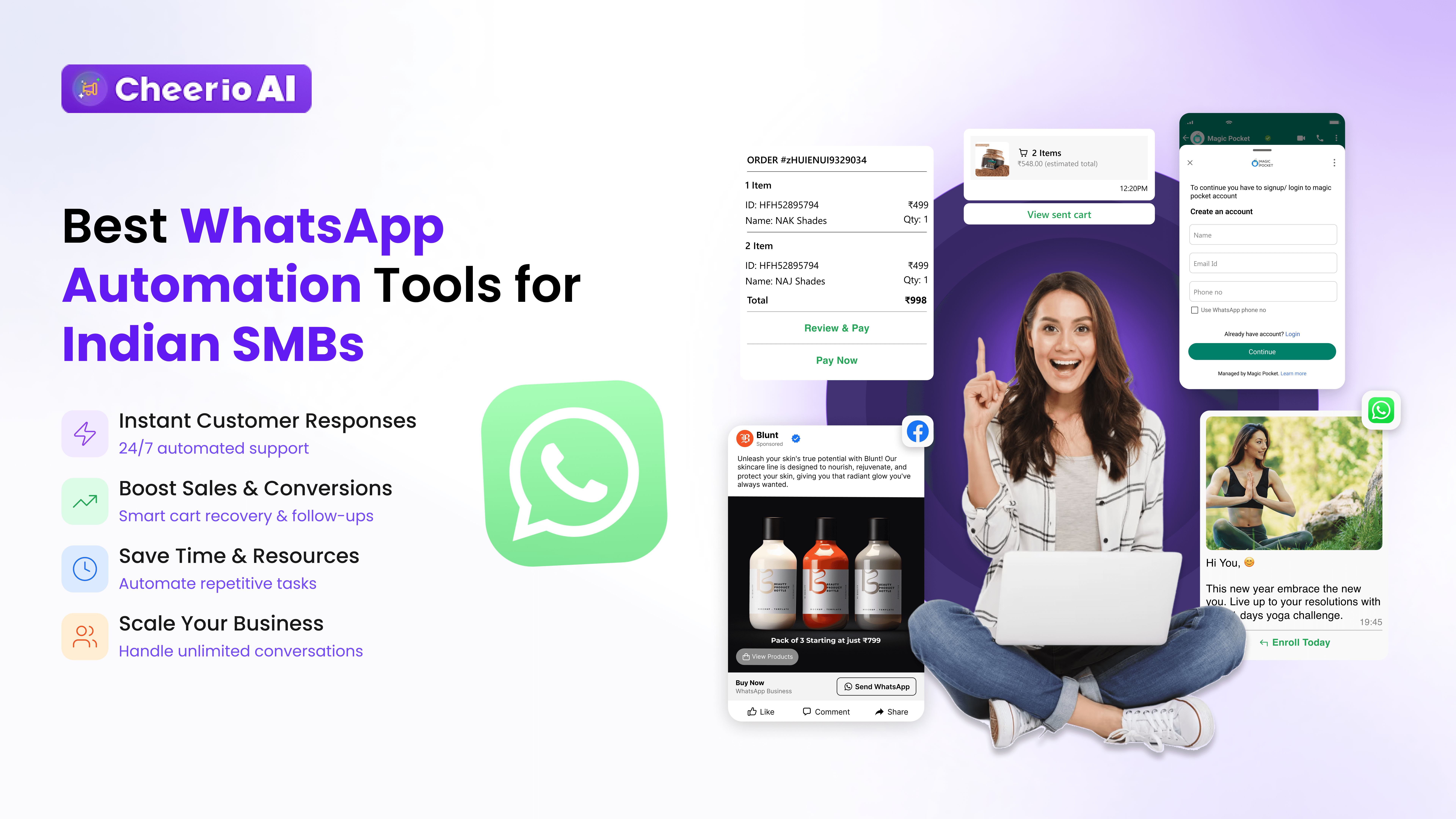
If your business is ready to move beyond fragmented communication and siloed customer data, Cheerio AI helps you make that shift effortlessly.
As a unified omnichannel marketing platform, Cheerio AI connects email, Meta channels, WhatsApp, SMS, marketplaces, and offline touchpoints into one intelligent system. This enables you to reach out to customers on different platforms without manually going through the hassle of connecting with them.
It enables personalised automation, real-time insights, and consistent customer experiences across every channel your audience uses. Whether you’re building your first omnichannel workflow or scaling a mature operation, Cheerio AI equips your brand with the tools to engage smarter, grow faster, and deliver journeys your customers will remember.